

Cold-Formed Steel 101
Why It’s Reshaping Home Construction
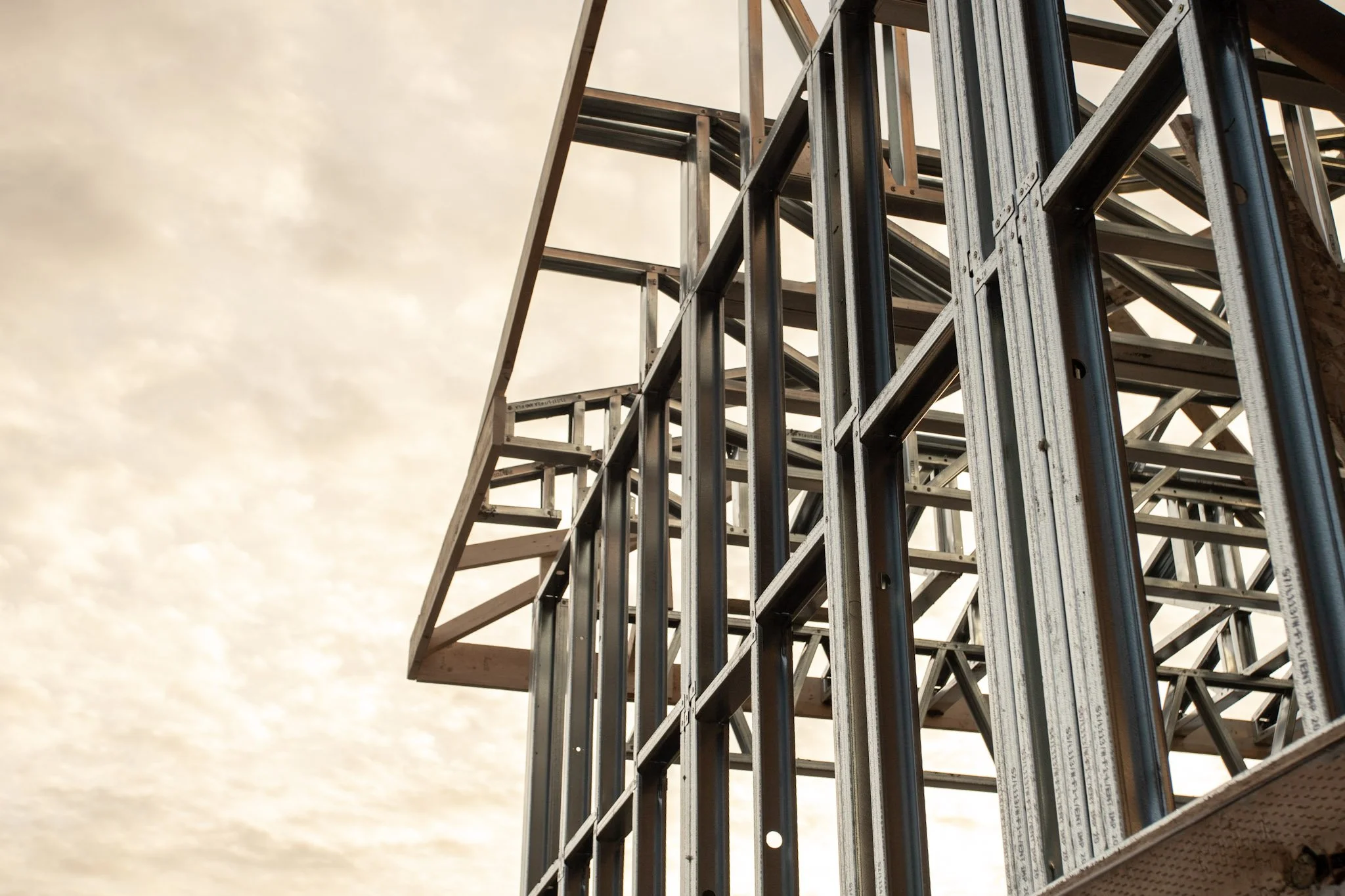
Cold-formed steel (CFS) – also known as light-gauge steel – is a method of forming steel framing components (like studs and joists) by rolling or pressing steel at room temperature. These lightweight, high-strength steel pieces are used to create the structural “skeleton” of a building, serving the same role that traditional 2×4 lumber does in a wood-framed house.
Why are many construction companies around the world adopting CFS?
The reason is simple: performance. Steel framing offers several advantages that are hard for wood to match:
Faster build times and efficiency: Factory-made steel panels allow projects to move from foundation to framed structure in days, not weeks, reducing construction timelines and labor costs (more on this in our next post).
Strength-to-weight: Steel has the highest strength-to-weight ratio of any commonly used construction material. A steel frame can be much lighter than a wood frame for the same strength, making handling and assembly easier on site.
Dimensional stability: Cold-formed steel doesn’t warp, twist, or shrink as it ages or as moisture conditions change. This means straighter walls and a more precise build – every SteelSafe panel is designed to be square and plumb.
Less waste: CFS components are manufactured to exact dimensions. This results in far less scrap material on site – often less than 4% waste with steel vs 20% or more with lumber. Plus, any steel off-cuts are fully recyclable instead of heading to a landfill.
Consistent quality: Because steel framing components are produced in a controlled process to meet strict standards, there’s no variability like you get with wood (no knots, no regional density differences). Every piece arrives straight and true.
The Canadian perspective
Canada’s homebuilders are beginning to embrace cold-formed steel as lumber costs remain volatile and building codes push for improved fire safety and energy efficiency. Steel’s pricing is more stable (no sudden seasonal price spikes like lumber), and its non-combustible nature opens opportunities that wood can’t – for instance, Canadian codes often limit combustible wood structures to six storeys for fire safety, whereas steel-framed buildings are not subject to the same height restrictions.
Conclusion
Cold-formed steel framing is reshaping residential construction by offering a stronger, straighter, and often smarter way to build. In the rest of this series, we'll dive deeper into specific benefits: from construction speed and cost savings to safety, durability, and sustainability. SteelSafe’s mission is to help builders leverage these advantages to deliver homes that truly stand the test of time.
About SteelSafe
SteelSafe is a Canadian steel framing system designed specifically for residential construction. Using precision-engineered, cold‑formed steel panels, SteelSafe helps builders deliver homes with greater consistency, durability, and long-term performance — without changing how those homes look or live.
Why are many construction companies around the world adopting CFS?
The reason is simple: performance.